
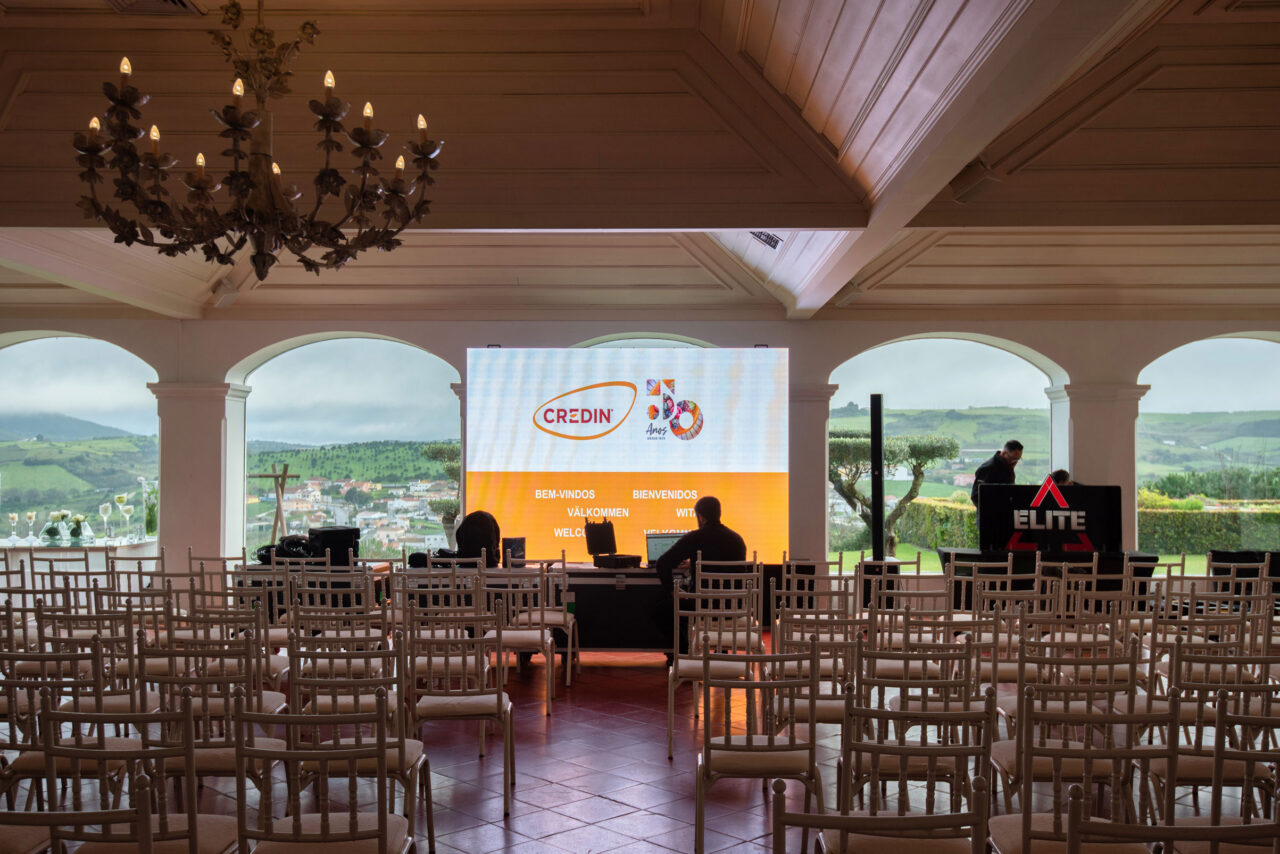
Organising a successful corporate event involves following a clear sequence of steps: defining your objectives, setting a budget, understanding your audience, booking the date and venue in advance, creating the programme, arranging catering and logistics, and finally evaluating the results. When each stage is addressed in the right order, subsequent decisions become easier and the risk of unexpected problems is reduced.
This guide covers different types of corporate events, from strategic meetings to gala dinners, and includes a sample programme, a summary table and frequently asked questions.
Tailor-Made Corporate EventsPré-visualizar alterações (abre num novo separador)
What Types of Corporate Events Are There?
Before getting started, it is important to identify the type of event you are organising, as this will determine its format, duration and venue requirements. The most common types include:
- Strategic meetings and conferences, focused on presentations and sharing information.
- Kick-off events, marking the beginning of a year, quarter or project.
- Results presentations, designed to communicate performance to teams or business partners.
- Team lunches and dinners, focused on bringing colleagues together and recognising achievements.
- Gala dinners and Christmas parties, offering a more festive atmosphere.
- Product launches, aimed at customers, the press or distributors.
- Training sessions and workshops, requiring suitable spaces for group activities.
How to Organise a Memorable Company Kick-Off Event
Step 1: Define the Event’s Objectives
The first question to ask is: what should happen as a result of this event? Informing, motivating, recognising achievements, bringing teams closer together or introducing something new to customers are different objectives that call for different approaches.
One or two main objectives are enough. They should guide every subsequent decision, from the programme to the choice of venue, and provide a basis for assessing whether the event has achieved its purpose.
Step 2: Set Your Budget
The budget should be established early on, even if it is only an estimate, as it will influence the number of attendees, the duration of the event and the type of services required.
Typical corporate event expenses include:
- Venue hire.
- Catering and beverages.
- Technical equipment, including sound, audiovisual systems and projection.
- Decoration and communication materials.
- Entertainment, speakers or activities.
- Transport and, where necessary, accommodation.
Setting aside a small contingency budget will help you manage last-minute adjustments, such as changes to the number of attendees or the programme.
Step 3: Understand Your Audience and Number of Attendees
Knowing who will be attending influences almost every aspect of the event, from its tone and catering arrangements to the schedule and location. A senior management meeting has different requirements from a company-wide celebration or a customer product launch.
At this stage, it is useful to gather the following information:
- Estimated number of attendees.
- Known dietary requirements.
- Where attendees will be travelling from, to assess transport and overnight accommodation needs.
- Any accessibility requirements.
Step 4: Choose the Date and Book in Advance
Demand for corporate event venues tends to increase at certain times of the year, particularly towards the end of the year, when Christmas parties take place, and at the beginning of the year, when companies organise kick-off events and results presentations. During these periods, booking several months in advance provides greater flexibility when choosing your preferred date and venue.
When selecting a date, check your company’s internal calendar for quarterly reporting deadlines, holiday periods and other commitments that could affect attendance.
Checklist for Organising Your Company Christmas Party
Step 5: Choose the Right Venue
The venue has a direct impact on the attendees’ experience and how smoothly the programme runs. Beyond its appearance, it is essential to assess whether it meets the event’s practical requirements.
Key factors to consider include:
- Capacity, according to the intended format, whether a seated meal, cocktail reception or theatre-style seating.
- Location and accessibility, particularly when attendees are travelling from different areas.
- Parking, for those arriving by car.
- Catering, including whether it is provided in-house or by an external supplier.
- Technical equipment and internet connectivity, especially when presentations are planned.
- Exclusivity, ensuring privacy and flexibility when organising the programme.
- Accommodation, for multi-day events or attendees travelling from other regions.
- Outdoor spaces, providing opportunities for breaks and informal networking.
Visiting the venue before confirming your booking can help you visualise the room layout, how attendees will move between spaces and how the different parts of the programme will work.
Step 6: Create the Event Programme
A well-structured programme balances presentations and activities with breaks and opportunities to socialise. Sessions that run for too long without a break can reduce attention, while a programme without a clear structure may make it harder to keep attendees engaged.
Example of a full-day corporate event programme:
| Time | Activity |
|---|---|
| 09:00 | Welcome reception and breakfast |
| 09:30 | Opening session and presentation of objectives |
| 11:00 | Coffee break |
| 11:30 | Team sessions or workshops |
| 13:00 | Lunch |
| 14:30 | Group activity or guest panel discussion |
| 16:30 | Break |
| 17:00 | Closing session and key takeaways |
| 18:00 | Cocktail reception or networking |
This example can be adapted into a half-day programme or extended to include dinner, depending on the objectives established in the first step.
Step 7: Plan the Catering
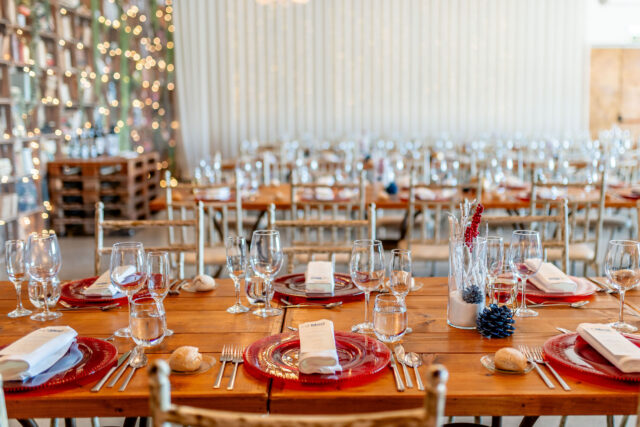
Food is often one of the most talked-about aspects of a corporate event. The catering format should suit the type of occasion: a seated lunch encourages conversation among colleagues at the same table, while a cocktail reception or buffet allows guests to move around and interact with different teams.
Before finalising the menu, share the following information with the venue’s team:
- Number of attendees and dietary requirements.
- Scheduled breaks and meal times.
- Preferred atmosphere, whether formal or more relaxed.
Step 8: Organise Logistics and Communication
Once the venue and programme have been confirmed, it is time to address the practical details that will help everything run smoothly:
- Invitations and confirmations, sent well in advance with all the necessary information, including date, time, address and directions.
- Transport, when arranging group travel is appropriate.
- Accommodation, for multi-day events or attendees travelling from other regions.
- Materials, such as presentations, signage, name badges and gifts.
- A designated point of contact, responsible for coordinating with the venue’s team on the day of the event.
Step 9: Prepare a Contingency Plan
Even a carefully planned event can face unexpected changes, such as a delayed speaker, a change in weather or a variation in the number of attendees. Having alternatives prepared in advance makes it easier to respond calmly and efficiently.
Some questions to clarify with the venue include:
- What indoor alternatives are available for outdoor activities in case of rain?
- What is the deadline for adjusting the final number of attendees?
- How will any technical issues during presentations be resolved?
Step 10: Evaluate the Results
The work does not end when the event is over. Gathering feedback from attendees, through a short survey or informal conversations, helps identify what worked well and what could be improved.
It is also important to compare the results with the objectives established in the first step and the planned budget. These findings will be useful when preparing your next corporate event.
Summary of the Steps
| Step | What to Decide |
|---|---|
| Objectives | What should change for teams or guests after the event |
| Budget | Total budget and main expense categories |
| Audience | Number of attendees, their profile and specific requirements |
| Date | Time of year, day of the week and how far in advance to book |
| Venue | Capacity, accessibility, catering, equipment and accommodation |
| Programme | Sequence of sessions, breaks and networking opportunities |
| Catering | Meal format, menu and dietary requirements |
| Logistics | Invitations, transport, materials and designated point of contact |
| Contingency planning | Alternatives for weather conditions, scheduling and technical issues |
| Evaluation | Attendee feedback and comparison with the event’s objectives |
Casa de Reguengos Group Venues for Corporate Events
The Casa de Reguengos group brings together four properties, each with its own distinctive character. Three are located in Vila Franca do Rosário, near Mafra, approximately 25 minutes from Lisbon, while Herdade das Sesmarias is situated in Ferreira do Alentejo. All venues offer in-house catering and dedicated support from the sales team from the initial enquiry onwards.
| Venue | Features |
|---|---|
| Casa de Reguengos | Up to 600 guests for seated events. Spacious, light-filled main hall with panoramic views of the surrounding countryside. Garden and terrace. Integrated dance floor. Private parking. |
| Quinta do Casal Novo | Up to 300 guests for seated events. Restored 18th-century building. Spacious, versatile function room. Terrace with swimming pool and reflecting pool. Private parking. |
| Our Quinta | Up to 160 guests for seated events. Modern, intimate venue. Accommodation with 16 double rooms. Private parking. |
| Sesmarias Monte | Up to 150 guests. Set within a 300-hectare estate in the Alentejo. Exclusive use of the venue throughout the event. Accommodation for up to 48 guests. |
| Sesmarias Barragem | Up to 200 guests. Set within a 300-hectare estate in the Alentejo. Exclusive use of the venue throughout the event. Accommodation for up to 48 guests. |
For buffet or cocktail-style events, capacity may be higher than the figures indicated for seated dining. For presentation-style events, capacity should be confirmed with the sales team according to the room layout.
Several of these venues have already hosted corporate events. Rijk Zwaan praised the organisation and professionalism at Casa de Reguengos, Volkswagen highlighted the service and dinner at Quinta do Casal Novo, and Novartis commended the venue, food and friendliness of the team at Our Quinta.

Frequently Asked Questions
Where Should You Start When Organising a Corporate Event?
Start by defining the objectives. Establishing what you want to achieve will guide every subsequent decision, from the budget and venue selection to the event programme.
What Is the Maximum Capacity for a Corporate Event at Casa de Reguengos Group Venues?
Casa de Reguengos can accommodate up to 600 guests for seated events, Quinta do Casal Novo up to 300 and Our Quinta up to 160. At Herdade das Sesmarias, the Monte venue accommodates up to 150 guests, while the Barragem venue accommodates up to 200.
Do the Venues Offer In-House Catering?
Yes. All venues within the group provide their own catering services.
Can Attendees Stay Overnight at the Venue?
Yes, at two of the properties. Our Quinta offers 16 double rooms, while Herdade das Sesmarias provides accommodation for up to 48 guests.
Are the Venues Available for Exclusive Use?
Yes. During the event, the entire venue is reserved exclusively for the company and its guests.
How Far in Advance Should You Book a Corporate Event Venue?
This depends on the time of year. For peak periods, such as the end and beginning of the year, booking several months in advance is recommended. For other dates, availability can be confirmed directly with the sales team.


