
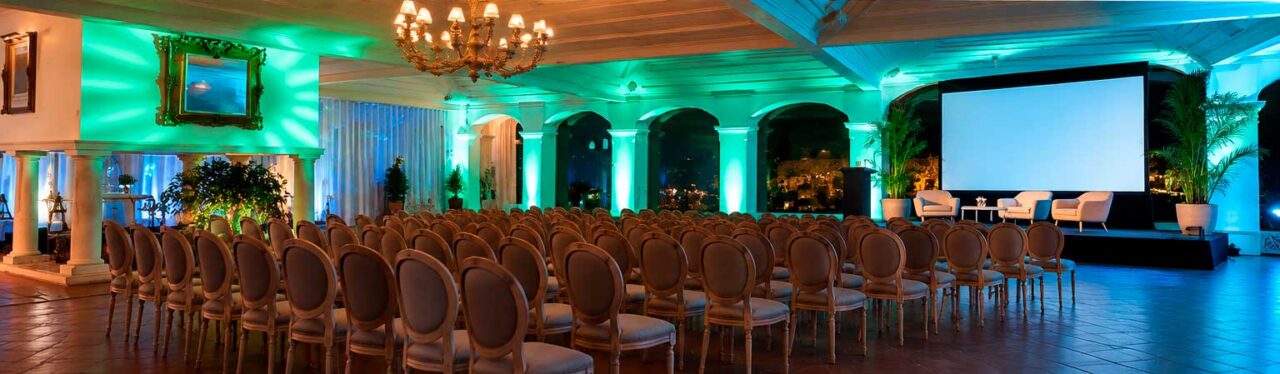
Organising a company kick-off event involves defining a clear objective, choosing the right format for the number of participants, booking the date and venue in advance, and creating an agenda that balances working sessions with opportunities for social interaction. When these elements are aligned, a kick-off becomes more than just an initial meeting. It becomes a starting point that teams remember throughout the year.
In this guide, we explain each stage of the planning process, including a sample agenda and the key factors to consider when choosing a venue.
What is a company kick-off event?
A kick-off is an event that marks the beginning of a new cycle: a year, a quarter, a project, or a new strategy. It brings teams together to share objectives, present priorities, and ensure alignment across departments.
The most common types include:
-
Annual kick-off events, usually held in January or February to present annual goals and plans.
-
Sales kick-off events, focused on sales teams, covering targets, products, and incentives.
-
Project kick-off events, bringing together everyone involved in a new project or launch.
-
Post-change kick-off events, following a merger, restructuring, or leadership transition.
Although each has a different focus, they all share the same purpose: ensuring everyone leaves the event working towards a common goal.
Step 1: Define the objectives of your kick-off
Before considering dates or venues, it is worth answering one simple question: what should change within the teams as a result of this event?
Some possible objectives include:
-
Communicating the strategy and goals for the new cycle.
-
Strengthening connections between teams that work separately, across different cities, or remotely.
-
Recognising achievements from the previous period.
-
Motivating and engaging employees in a new project.
A kick-off with one or two main objectives tends to be more effective than an agenda that attempts to cover everything.
Venue for company results presentations and annual meetings

Step 2: Choose the format and audience
The format depends on the number of participants, the time available, and the type of message you want to communicate.
-
Half-day event. Suitable for focused sessions, with presentations followed by lunch or a cocktail reception.
-
Full-day event. Allows for a combination of plenary sessions, team workshops, and opportunities to socialise at the end of the day.
-
Two-day event with an overnight stay. Particularly useful when teams travel from different regions or when more time is needed for networking and team bonding.
You should also define who will attend: the entire company, management teams, a specific department, or external guests such as partners and distributors.
Step 3: Book the date in advance
Annual kick-off events are typically concentrated within a short period, between January and February. As many companies look for venues during the same weeks, booking several months in advance can provide a wider choice of available dates.
When choosing the date, consider:
-
Financial closing periods and company results presentations.
-
Public holidays, school holidays, and peak business periods.
-
The time required to prepare presentations, invitations, and logistics.
Step 4: Choose the right venue
The venue directly influences how teams experience the kick-off. Holding the event outside the office helps break daily routines and creates an environment where participants can focus, engage, and connect.
Key factors to evaluate include:
-
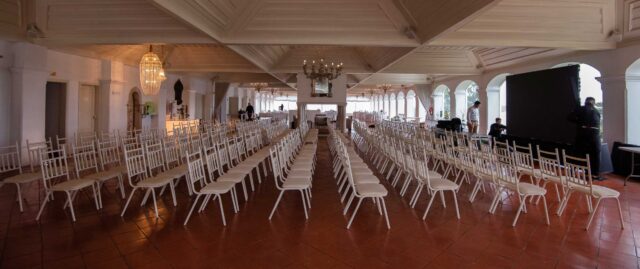
Capacity for the intended layout: theatre-style seating, workshop tables, or a seated dinner.
-
Breakout rooms for parallel sessions or departmental meetings.
-
Audiovisual equipment and a reliable Wi-Fi connection.
-
Catering for different moments throughout the day, including dietary requirements.
-
Exclusive use, allowing the company to enjoy the venue privately.
-
Accessibility and parking, particularly when participants are travelling by car.
-
Accommodation, if the programme includes an overnight stay.
Step 5: Create the event agenda
A well-structured agenda alternates focused sessions with breaks. Long, consecutive presentations can reduce concentration, particularly after lunch.
Sample agenda for a full-day company kick-off
| Time of day | Activity |
|---|---|
| Morning | Guest arrival, welcome coffee, and introductions |
| Opening session | Leadership address and strategy presentation |
| Mid-morning | Departmental or team sessions |
| Lunch | Shared meal designed to encourage interaction between teams |
| Afternoon | Practical workshops, employee presentations, or guest speakers |
| Late afternoon | Recognition and summary of commitments for the new cycle |
| Evening | Networking dinner or cocktail reception |
This is simply an example. The agenda should be adapted to the objectives established in the first step and to the company’s culture.
A few ideas to make the day more engaging:
-
Give employees from different departments a voice, rather than limiting presentations to senior management.
-
Include opportunities to recognise individual and team achievements.
-
Allow time for questions and open discussion.
-
Conclude with clear, actionable commitments that participants can easily remember.
Step 6: Communicate before the event
The way a kick-off is announced influences employees’ expectations. Sending invitations in advance, sharing the agenda, and explaining the purpose of the event helps participants arrive feeling more informed and engaged.
Your communication should include:
-
Date, time, and venue, including directions.
-
A summary of the agenda and dress code, if applicable.
-
A request for information about dietary restrictions and accessibility requirements.
-
Transport and accommodation details, where relevant.
Step 7: Take care of the logistics
Good event logistics should go largely unnoticed by participants. When everything runs smoothly, the day unfolds without unnecessary interruptions.
-
Confirm the final number of participants with the venue by the agreed deadline.
-
Test all audiovisual equipment and presentations before the event begins.
-
Appoint someone to coordinate directly with the venue’s team on the day.
-
Arrange transport if participants are travelling from different locations.
-
Prepare supporting materials, such as printed agendas or name badges.
Step 8: Follow up after the kick-off
The impact of a kick-off is measured in the weeks that follow. A few practices can help maintain momentum:
-
Share a summary of the main messages and commitments.
-
Send event photographs and highlights to the teams.
-
Collect feedback through a short questionnaire.
-
Revisit the objectives presented during team meetings in the following months.
Casa de Reguengos group venues for company kick-off events
The Casa de Reguengos group offers four venues for corporate events, all with in-house catering. Services available to companies include exclusive venue hire, audiovisual equipment, Wi-Fi, accommodation, parking facilities, and dedicated event coordination throughout the planning process.
| Venue | Key features |
|---|---|
| Casa de Reguengos | Capacity for up to 600 guests for seated events. A spacious, light-filled main hall, ideal for large corporate gatherings. |
| Quinta do Casal Novo | Capacity for up to 300 guests for seated events. A restored 18th-century building with a spacious hall and natural surroundings. |
| Our Quinta | Capacity for up to 160 guests for seated events. A contemporary setting, suitable for corporate meetings and dinners, with 16 double rooms. |
| Herdade das Sesmarias | A countryside estate in Ferreira do Alentejo, offering exclusive venue hire and accommodation for up to 48 guests. |
Casa de Reguengos, Quinta do Casal Novo, and Our Quinta are located near Mafra, approximately 25 minutes from Lisbon, with accommodation options available. Herdade das Sesmarias is also an option for corporate kick-off events with overnight stays in a rural setting in the Alentejo region.
Companies such as Novartis, Volkswagen, Norauto, Generis, ACP, Tecnopack, Remax, and Essilor have already hosted events at the group’s venues.
Frequently asked questions
When should you organise an annual company kick-off?
Most annual kick-off events take place between January and February. Booking a venue several months in advance can provide greater flexibility when choosing dates.
How many participants can Casa de Reguengos group venues accommodate?
For seated events, Casa de Reguengos can accommodate up to 600 guests, Quinta do Casal Novo up to 300, Our Quinta up to 160, Herdade das Sesmarias Monte up to 150, and Herdade das Sesmarias Barragem up to 200 guests.
Do the venues offer in-house catering?
Yes. Casa de Reguengos, Quinta do Casal Novo, Our Quinta, and Herdade das Sesmarias all offer in-house catering services.
Is accommodation available for kick-off events with overnight stays?
Yes. Our Quinta offers 16 double rooms, while Herdade das Sesmarias provides exclusive accommodation for up to 48 guests.
Do the venues provide audiovisual equipment and Wi-Fi?
Yes. The group provides audiovisual equipment and Wi-Fi for corporate events.
Is it possible to book a venue exclusively for our company?
Yes. Exclusive venue hire is one of the services available for corporate events across the group.
Where are the venues located?
Casa de Reguengos, Quinta do Casal Novo, and Our Quinta are located in Vila Franca do Rosário, near Mafra, approximately 25 minutes from Lisbon. Herdade das Sesmarias is located in Ferreira do Alentejo.


